Climatize
What Does It Mean to Invest in Clean Energy?
6 minute read
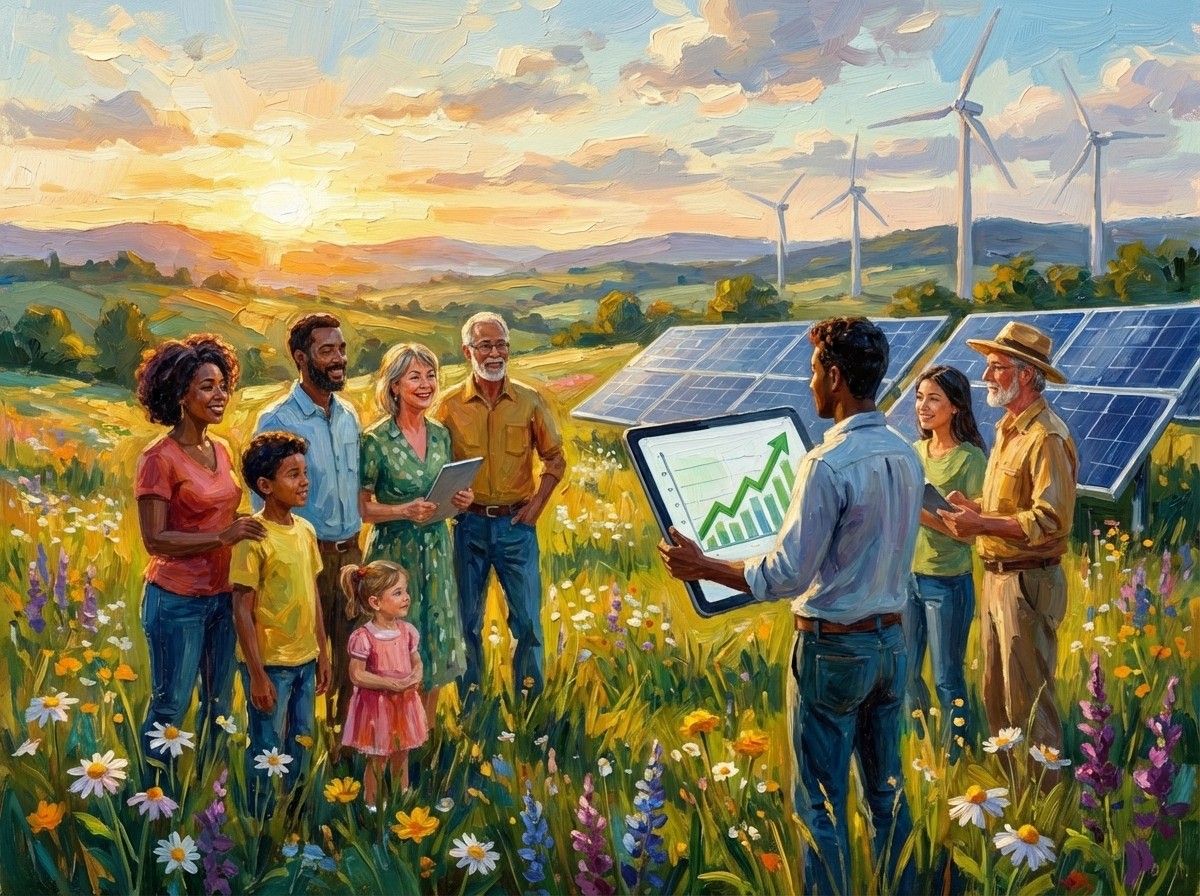
When people hear “invest in clean energy,” they often picture solar panels or wind turbines.
That image is not wrong. It is just incomplete.
Investing in clean energy means putting capital into companies or projects that generate, store, or support lower carbon electricity, with the goal of potentially earning a financial return. Returns are not guaranteed. Clean energy can include solar, wind, hydro, geothermal, battery storage, and grid technologies.
At its core, this is infrastructure. Real assets. Real timelines. Real tradeoffs.
This article is for education only. It is not financial, legal, or tax advice.
Clean energy is infrastructure, not a trend
Clean energy systems do something simple and important. They produce electricity people use every day.
This is no longer a niche corner of the market. Electricity demand is rising, and the International Energy Agency reports global electricity consumption rose by an estimated 4.3% year over year in 2024, with strong growth expected to continue in 2025 to 2027.
At the same time, many systems are shifting toward lower emissions generation. The International Energy Agency reports that all additional demand in its 2025 to 2027 forecast is set to be covered by low emissions technologies.
In the United States, coal retirements remain part of the power sector transition. The U.S. Energy Information Administration reports generators planned to retire 8.1 GW of coal fired capacity in 2025.
So when you invest in clean energy, you are not betting on a buzzword. You are backing physical systems that can potentially generate revenue by producing power over time.
Two main ways people invest in clean energy
1) Public markets
You can buy shares in public companies connected to clean energy or purchase ETFs that bundle many of those companies together.
Pros
• Simple access
• Easier to buy and sell compared to private investments
• Clear pricing
Tradeoffs
• Performance is tied to stock market movements
• Prices can move because of interest rates, market sentiment, or broader volatility, even when clean energy fundamentals are strong
2) Project based investing
Instead of buying shares in a company, you invest in a specific project, like a community solar site or a battery storage system.
These projects often earn revenue through electricity sales, sometimes supported by long term contracts. In many cases, that means you are evaluating project economics and execution, not daily market swings.
This model has become more accessible through Regulation Crowdfunding, often called Reg CF. The SEC explains that Reg CF transactions are required to take place online through an SEC registered intermediary, either a broker dealer or a funding portal.
Pros
• Direct connection to a specific real world project
• Often easier to understand the basic revenue path than a public stock price
• In some offerings, minimums can be lower than traditional private markets
Tradeoffs and risks
• Private investments can be illiquid, meaning your capital may be tied up and hard to sell quickly
• Projects can be delayed or underperform due to real world execution issues
• You can lose some or all of your investment
FINRA explains that crowdfunding investments can involve significant risk, including losing some or all of your investment.
Investing versus subscribing is a common mix up
Community solar is a good example of where people get confused.
A community solar subscription usually means you sign up to receive credits on your electricity bill. The U.S. Department of Energy explains community solar as a model where customers can subscribe to a shared solar installation and receive benefits such as bill credits.
That is different from investing.
Subscribing
• You are typically aiming for bill savings
Investing
• You are providing capital
• You are taking financial risk
• You may earn a return depending on the structure and performance
The risk side most people gloss over
Clean energy investments can be exciting. They can also be risky.
Even strong projects can face real world issues like:
• Construction delays
• Permitting or interconnection slowdowns
• Equipment delays or cost changes
• Operational performance issues
• Changes in market conditions
Public clean energy stocks can be volatile. Private investments can be illiquid, meaning your money may be tied up for years and may be difficult to sell.
FINRA is clear that crowdfunding investments can involve significant risk, including the possibility of losing your entire investment.
Why people allocate to clean energy
People tend to allocate to clean energy for a mix of three reasons. These are broad patterns, not guarantees.
Long term structural shift
Electricity demand is rising, and the International Energy Agency forecasts continued strong growth through 2027.Diversification
Some investors look for exposure that behaves differently than a traditional stock heavy portfolio. This depends on the vehicle chosen and is not a guarantee of better performance.Alignment
Some investors prefer their money to support lower emissions systems. That preference can be part of why they explore clean energy, but it should complement financial analysis, not replace it.
Clean energy is becoming more central to how the world powers homes and businesses, and that shift requires capital. The International Energy Agency highlights rising electricity demand and a growing role for low emissions technologies.
Investors help fund that buildout.
But this is not only a moral decision. It is a financial one. Understand what you are investing in, how it earns revenue, how long your capital may be tied up, and what could go wrong.
That is what it means to invest in clean energy.
Leave a comment
Climatize announces their $1.75M funding round.
For Developers